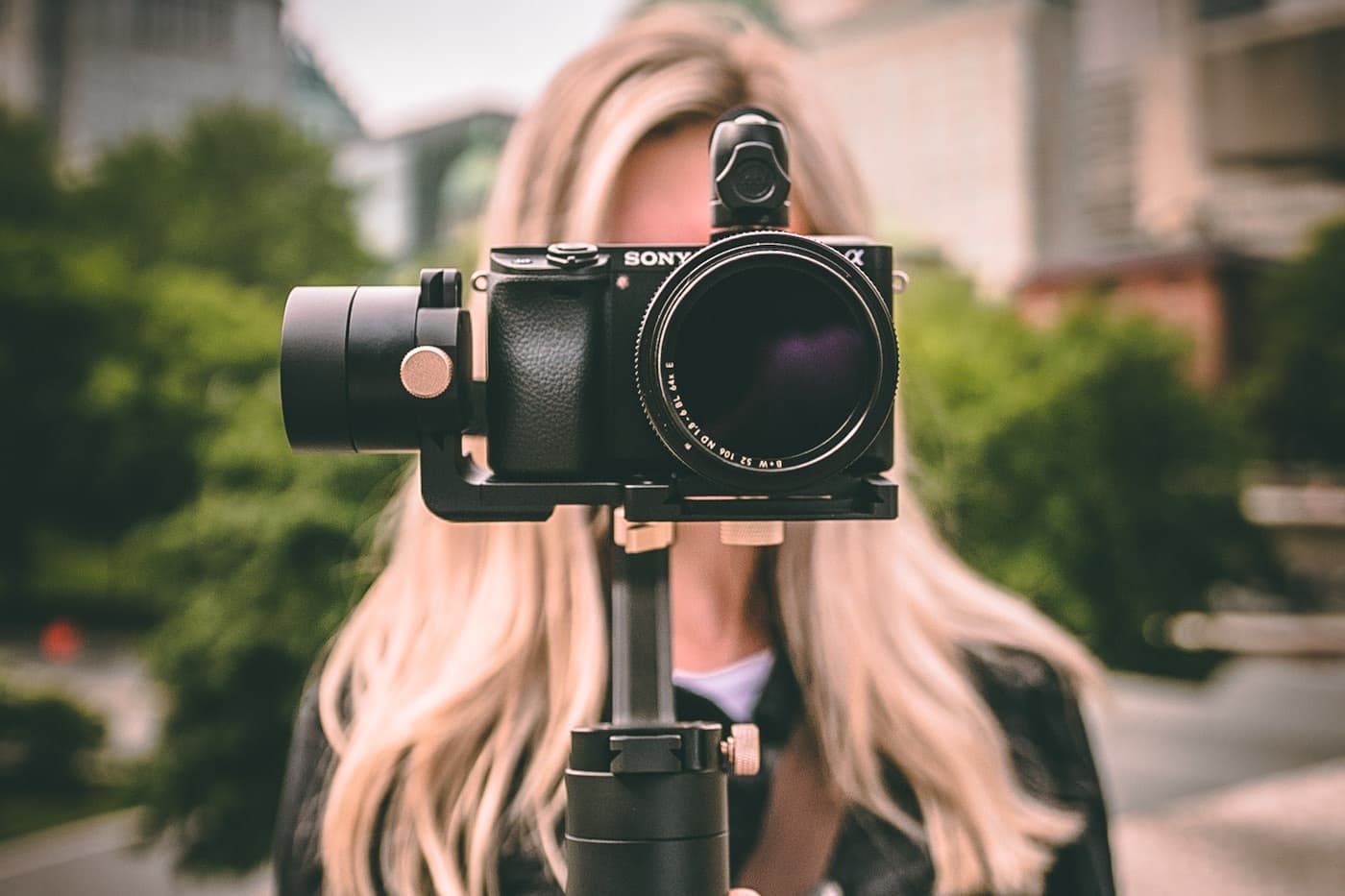
Yes — the pocket gimbal camera just had its biggest leap in years. Insta360 launched the Luna Ultra on June 10, 2026, an 8K handheld gimbal camera co-engineered with Leica, putting direct pressure on DJI's recently upgraded Osmo Pocket 4P. Both devices now pack image quality and stabilization that used to require a much bigger rig into something that fits in a jacket pocket — and that shift changes what "good enough to post" means for any brand making video in 2026.
Here is what shipped, how the two cameras stack up, and what the pocket camera race actually means for Houston brands building a content program.
What Shipped: Insta360's Luna Ultra
Insta360's flagship gimbal camera is built around a dual-lens system developed with Leica, and it is available now starting at $769.99 through the Insta360 Store, Amazon, Best Buy, and B&H. (Sources: Insta360, RedShark News)
What's actually in the box:
- A Leica Summicron lens on a 1-inch 8K sensor, paired with a secondary telephoto lens on a 1/1.3-inch sensor at F2.0 — five focal lengths total, with up to 12x zoom (6x lossless)
- 8K at 30fps with Dolby Vision, plus 10-bit I-Log capture for color flexibility in the edit
- Slow motion up to 4K/120fps or 1080p/240fps
- 37MP UltraPhotos and 200MP Scenic Panorama stills, for teams that need photo and video from the same shoot
- A detachable 2-inch OLED touchscreen that doubles as a monitor and a remote, with a range up to 65 feet
- 47GB of onboard storage, expandable via microSD up to 1TB, and a battery that charges to 80% in about 23 minutes
The whole unit weighs just over 200 grams.
DJI Answers Back: The Osmo Pocket 4P
DJI's Osmo Pocket 4P, the camera the Luna Ultra is built to compete with, takes a different bet. Instead of chasing resolution, it leans on dynamic range and color depth: a 1-inch CMOS sensor rated at 17 stops of dynamic range, 10-bit D-Log 2 — the first pocket gimbal camera to ship a professional color mode like it — and 4K recording at up to 240fps for genuinely usable slow motion.
The two cameras split the difference in a way worth knowing before either one earns a spot in a kit:
- Resolution: Luna Ultra's 8K beats the Pocket 4P's 4K ceiling
- Dynamic range: Pocket 4P's 17 stops outpaces Luna Ultra's 14
- Slow motion: Pocket 4P holds 4K at 240fps; Luna Ultra tops out at 1080p/240fps
- Color workflow: both ship a 10-bit log profile built for a real color-grading pipeline, not just a baked-in look
Neither camera wins outright — they're built for different priorities, which is exactly why the comparison is generating so much attention right now.
Why This Matters Beyond a Gear Review
A pocket camera shipping with a 10-bit log profile, Leica glass, and genuine dynamic range is a bigger deal than it sounds. Two years ago, that combination required a mirrorless body, a separate gimbal, and a lens — a kit costing several times more and requiring real handling skill to keep steady. Now it is a single device a founder can hand to a team member with almost no training.
That drops the floor on what counts as watchable footage. UGC, behind-the-scenes clips, founder content, and on-the-fly event capture can all look sharper without a bigger crew or a bigger budget. For brands running an Always-On Content cadence, that means more of the in-between moments — setup, staff, customer reactions — are worth capturing, because the camera doing the capturing is finally good enough to make them worth posting.
What a Better Pocket Camera Doesn't Fix
A sharper sensor and a wider dynamic range change what a camera can capture. They do not change what makes that footage worth watching.
Neither the Luna Ultra nor the Pocket 4P decides where to point the lens, how to light a subject, or which three seconds of a four-hour shoot day actually earn the post. Both still need:
- Audio captured on a real microphone, not the camera's built-in mic, for anything beyond a quick social clip
- A color pipeline and a real grade, not just whatever the camera applies by default — the 10-bit log footage both cameras shoot is built to be graded, not used straight out of camera
- Direction and shot planning, so a roll of footage becomes a structure with a hook, a build, and a close instead of a pile of clips
- A second angle or a real crew for anything that needs multi-camera coverage, sound design, or production value beyond a single handheld perspective
A better camera in more hands raises the average. It does not replace the judgment that turns footage into something that earns attention and drives an action.
What This Means for Houston Brands
A few things worth acting on if your team is building or updating a content kit:
A pocket gimbal camera is now a legitimate tool for your in-house team, not just a toy. If your brand has been putting off building any internal capture capability because "real" cameras felt out of reach, either of these devices closes that gap for founder clips, quick social content, and behind-the-scenes capture.
It still doesn't replace a production partner for anything that has to perform. A launch film, a recruiting piece, or a campaign tied to a real business outcome still benefits from direction, lighting, sound, and a crew that knows how to build a shot list around a goal — not just point a gimbal at the action.
Use the gap, don't fight it. The smartest content programs split the work: a pocket camera in-house for daily, in-the-moment capture, and a production partner for the pieces designed to convert. That split keeps the content bank full without spending crew budget on footage that never needed it.
Freddyville's Always-On Content programs are built around exactly that split — equipping teams to capture what they can in the moment, while our crews handle the shoots designed to be made for the screen and built to perform. If you want help figuring out what belongs in-house and what needs a real production day, start a project and we'll map it out with you.