Apple opened a 20,000-square-foot Advanced Manufacturing Center in Houston on August 13, 2026, offering free training in automation, circuit board assembly design, and machine-learning quality control — and confirmed that Mac mini production starts at the same Houston facility later this year. For Houston manufacturers, suppliers, and industrial services firms, the practical takeaway is this: the buyers and the workers you are competing for are about to get a much sharper picture of what modern manufacturing looks like, and your website video is probably still a slideshow of forklifts.
Here is what actually opened, why it changes the competitive floor for Houston industrial brands, and what is worth filming before the end of the year.
What Apple Actually Opened in Houston
The Advanced Manufacturing Center sits inside the same Houston campus where Apple's AI servers are already being assembled — a facility the company has put hundreds of millions of dollars into over roughly nine months. It is Apple's second U.S. manufacturing training site, following the Detroit academy that opened in August 2025 and has since trained close to 1,000 participants.
The Houston center is not a factory tour. It is a free training hub built for small and medium-sized businesses, supplier employees, and students. The curriculum covers:
- Advanced manufacturing principles
- Printed circuit board assembly design
- Machine-learning-driven quality control
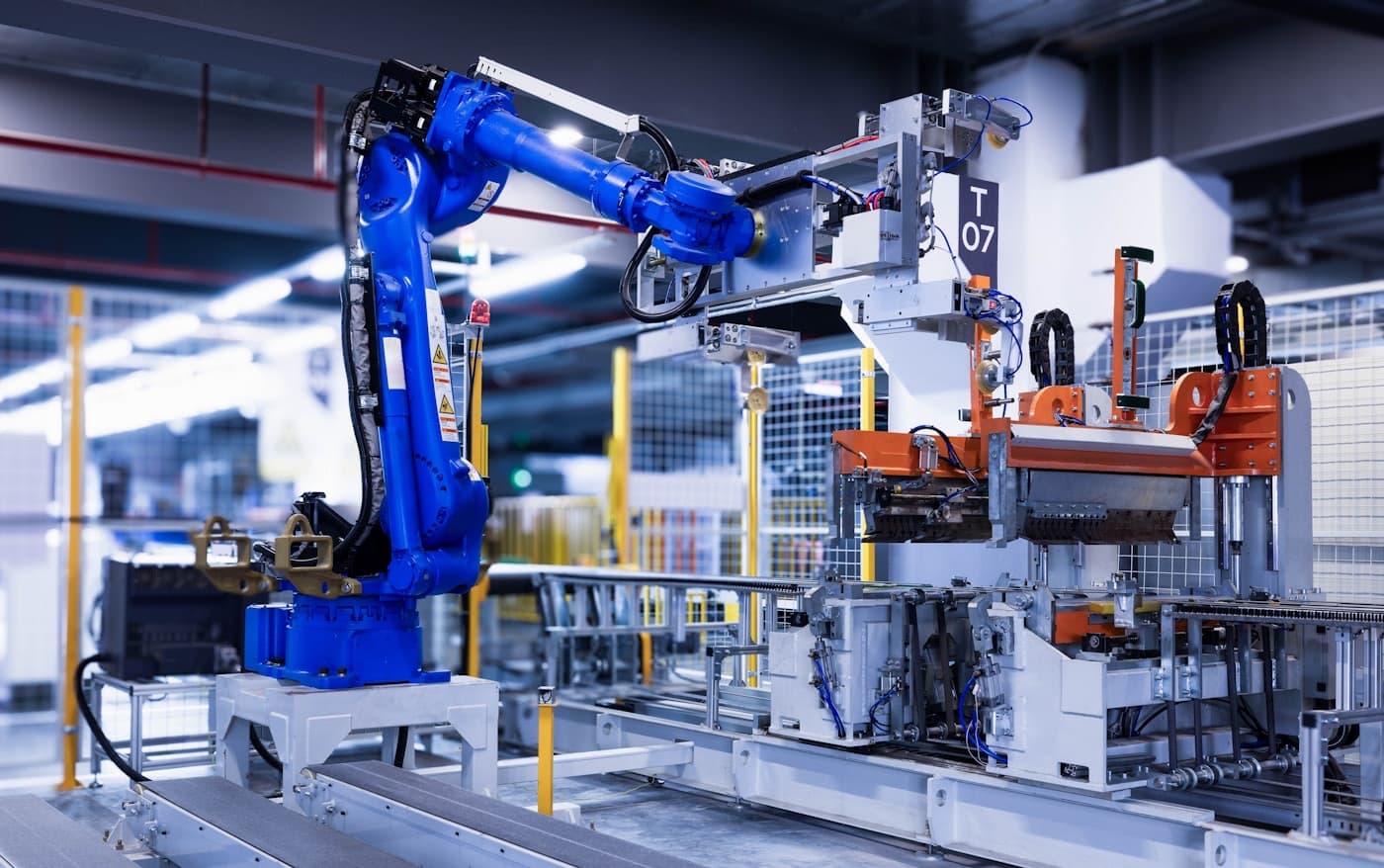
- Advanced automation and robotics
It runs on holographic tables, interactive labs, and hands-on access to real equipment. Tim Cook framed the effort as an attempt to "build the future of American manufacturing," and the whole thing sits under Apple's $600 billion American manufacturing commitment, which touches suppliers across all 50 states. Houston Mayor John Whitmire and federal officials including the U.S. Commerce Secretary were at the opening.
(Sources: Apple Newsroom, Greater Houston Partnership)
Why This Matters If Your Name Is Not Apple
Houston has been an industrial city for a century. What is new is the category. Petrochemical capacity, port throughput, and energy services have carried the region's industrial identity for decades — Houston still accounts for 41.1% of U.S. base petrochemical production. Advanced electronics manufacturing is a different story, and it brings a different kind of buyer.
Three things follow from that:
1. The supplier pool gets scrutinized. An ecosystem like this pulls in hundreds of vendors — machining, tooling, cleanroom services, logistics, calibration, staffing, facilities. Procurement teams at that level do not shortlist from a PDF line card. They watch. If two Houston shops have identical certifications and one has a two-minute floor walkthrough that shows tolerances, process control, and actual people, that one gets the call.
2. The reference point for "modern" resets. Once a few thousand Houston workers and students have walked through interactive labs and machine-learning quality control demos, a grainy 2019 facility video reads as a company that has not reinvested. That is a brand problem, not a video problem.
3. Recruiting just got harder. Houston added 39,700 jobs over the past year and ranked No. 3 in the country for job growth. But unemployment climbed to 5.2% — above the Texas average of 4.9% and the national rate of 4.4%. That combination means a labor market that is moving fast and unevenly. Skilled technical people have options. The company that can show what a shift actually looks like wins more of them than the company posting a text job ad.
(Sources: Hoodline, Houston.org)
What Houston Manufacturers Should Be Filming Before Year-End
Not a corporate overview. Not a drone shot of the parking lot set to library music. Four specific pieces, each designed to do one job:
- A capability film, 2 to 3 minutes. Your process, filmed as a process: material in, steps, controls, product out. Real machines, real hands, real numbers on screen. This is the asset you attach to an RFP response and embed above the fold. It answers "can these people actually do this" before anyone picks up a phone.
- A recruiting piece, 60 to 90 seconds. Shot on the floor during a real shift. One technician explaining what they run and why they stayed. This outperforms every job-board listing because it shows the room a candidate would actually be standing in.
- Four to six vertical clips. One machine, one process, one measurement per clip. Short, specific, scroll-stopping. Manufacturing content performs unusually well in vertical feeds because most people have never seen the inside of a working plant.
- A leadership or engineering explainer. Two minutes of your operations lead or lead engineer explaining a hard problem in plain language. Buyers fund people. Recruits join people.
The Mistake Most Industrial Brands Make
They film the building instead of the work.
The wide exterior, the lobby, the logo on the wall, the CEO at a desk — none of it proves anything. What earns attention on a factory floor is specificity: the tolerance being held, the fixture that took three iterations, the inspection step that catches the thing everyone else misses. That footage exists in your building every single day. Nobody is capturing it.
The other common miss is treating a facility film as a one-time expense. A single well-planned production day on an active floor yields the capability film, the recruiting piece, and a quarter's worth of vertical clips — if the shoot is scoped that way from the start. Scoped as "we need a video," it yields one video and a hard drive nobody opens again.
Houston Is Being Watched Right Now
National coverage of Houston manufacturing is running hotter than it has in years. That attention does not automatically transfer to your company, but it does mean buyers, candidates, and reporters are searching. What they find when they search is the thing you control.
If you run a Houston manufacturing, industrial services, or supplier business and your current video does not show what you actually make or how you actually make it, start a project with us. We build capability films, recruiting content, and vertical clips designed to be watchable by the people who decide — and made to last well past the news cycle that prompted them.