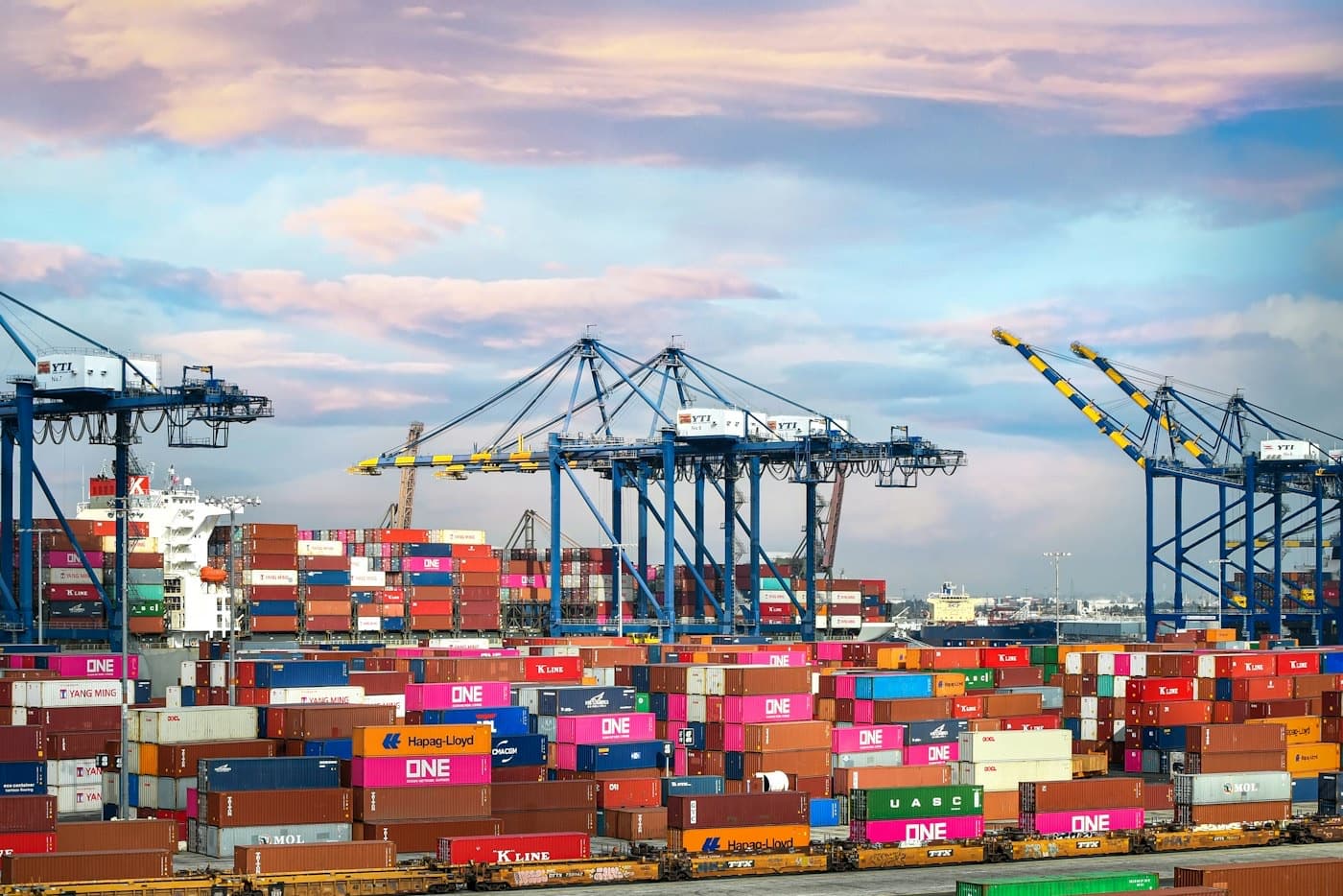
Short answer: Port Houston just closed the strongest first half in its history — 2,229,473 TEUs and more than 28 million tons of cargo — and in the same month Houston absorbed a $13.6 billion energy-technology acquisition. The industrial side of this city is growing at a pace most local marketing hasn't caught up to. Houston's industrial, logistics, and energy-services companies are the least-filmed sector in the No. 4 metro in America, and that gap is the opportunity.
The Numbers Behind Houston's Industrial Surge
This isn't sentiment. It's tonnage:
- Port Houston handled 2,229,473 TEUs between January and June 2026 — the highest first-half container total in the port's history.
- Total cargo across the public terminals passed 28 million tons, up 3% year over year, with general cargo up 34% and breakbulk up 35%.
- Deep-draft vessel transits rose 13% in June to 1,559, with barge transits up 4% to 18,180 — the channel is busy, not just the terminals.
- Across the wider Houston Ship Channel region, total trade tonnage rose 17% through May, driven by a 23% jump in exports.
- Baker Hughes closed its $13.6 billion acquisition of Chart Industries on July 16, 2026, folding it in as a new reporting segment aimed at LNG, data centers, decarbonization, and industrial gas.
Put those together and you get a picture: more cargo, more vessels, more exports, and a consolidating energy-technology sector building for markets that didn't exist on the org chart five years ago.
Why Industrial B2B Is Houston's Most Under-Filmed Sector
Walk the marketing of almost any Houston industrial firm — a freight forwarder, a fabrication shop, a valve manufacturer, a logistics 3PL, an energy-services contractor — and you'll find the same three assets: a stock-photo website, a PDF capability statement, and a trade-show booth.
The reasoning is usually some version of "our buyers don't watch video, they read specs." That was never quite true, and in 2026 it isn't remotely true. The people signing industrial contracts are the same people watching YouTube on a Sunday and scrolling LinkedIn on a Tuesday. The buying committee got younger. The research happens before the RFP. And a company that can't be seen operating is a company that has to be imagined — which means the buyer imagines the competitor instead.
There's a second problem underneath it. Industrial work is genuinely hard to explain in text. A page of copy about "integrated cryogenic solutions" or "multimodal drayage capacity" asks a buyer to do a lot of translation work. Ninety seconds of the actual yard, the actual line, the actual crew — that does the translating for them.
Where Video Actually Earns Its Keep in Industrial B2B
Three places, in order of how fast the return shows up.
1. Recruiting. Houston's industrial labor market is one of the tightest in the country. Welders, pipefitters, CNC machinists, maintenance techs, industrial electricians, CDL drivers — every operator on the ship channel is competing for the same short list, and most are competing with a job board post that reads exactly like the one next to it. A short, honest video of the shop floor, the shift, the people, and what the work actually pays does more for a hiring funnel than another sponsored listing. It's the single fastest-converting use of video in this sector, and almost nobody in Houston is doing it well.
2. Capability explanation. Industrial sales cycles are long because trust is slow. Video shortens the part where a prospect is trying to figure out whether you can actually do the thing. A capability film that shows scale, certifications, safety culture, and process — shot on your site, with your people — replaces a dozen emails and gets forwarded inside the buyer's organization in a way a PDF never does. This is what our Flagship Films work is built for.
3. Integration and change communication. When a Houston company is acquired, merges, or spins up a new segment — and after a $13.6 billion close in this market, more will — thousands of employees, customers, and suppliers need the same message at the same time. A memo gets skimmed. A leader on camera, saying the thing plainly, gets watched. Internal video is the least glamorous line item in industrial marketing and one of the highest-leverage.
What Houston Industrial Brands Should Build
You don't need a Hollywood package. You need a small library that works across recruiting, sales, and internal comms from one production day:
- One 90-second capability film — the plant, the yard, the channel, the crew. Made for the screen, not a trade-show loop nobody stands still for.
- A recruiting cut — 60 seconds, sound-on, built for LinkedIn and Indeed, showing the work as it actually looks at 6 a.m.
- Three to five leader-on-camera pieces — short, direct answers to the questions buyers and employees actually ask. These carry the trust.
- Vertical cutdowns — the same footage sliced for LinkedIn, Instagram, and YouTube Shorts so one shoot feeds a quarter of posting.
- A process or safety explainer — the piece that makes a complicated capability legible in 90 seconds instead of a 40-page deck.
Shot once, that library runs for eighteen months across every channel you own — content made to last rather than a one-off spend.
The Window
Record cargo, rising exports, consolidating energy technology, and a labor market that punishes anyone who can't attract a crew. Houston's industrial sector has the growth. What it doesn't have — yet — is a visual presence that matches it.
That's an advantage while it lasts. The first freight company, fabricator, or energy-services firm in your niche to put watchable video behind its capabilities gets to define what the category looks like online. Everyone after that is responding to it.
If you run an industrial, logistics, or energy-services business in Houston and your marketing is still a capability statement and a stock photo, start a project with us. The work you do is worth showing. Let's put it on the screen.
Sources: Port Houston H1 2026 container and cargo figures via Port Technology International and Splash247. Acquisition terms via the Baker Hughes investor relations release, July 16, 2026. Houston Ship Channel regional trade tonnage via the Houston Ship Channel Region Monthly Trade & Market Report.