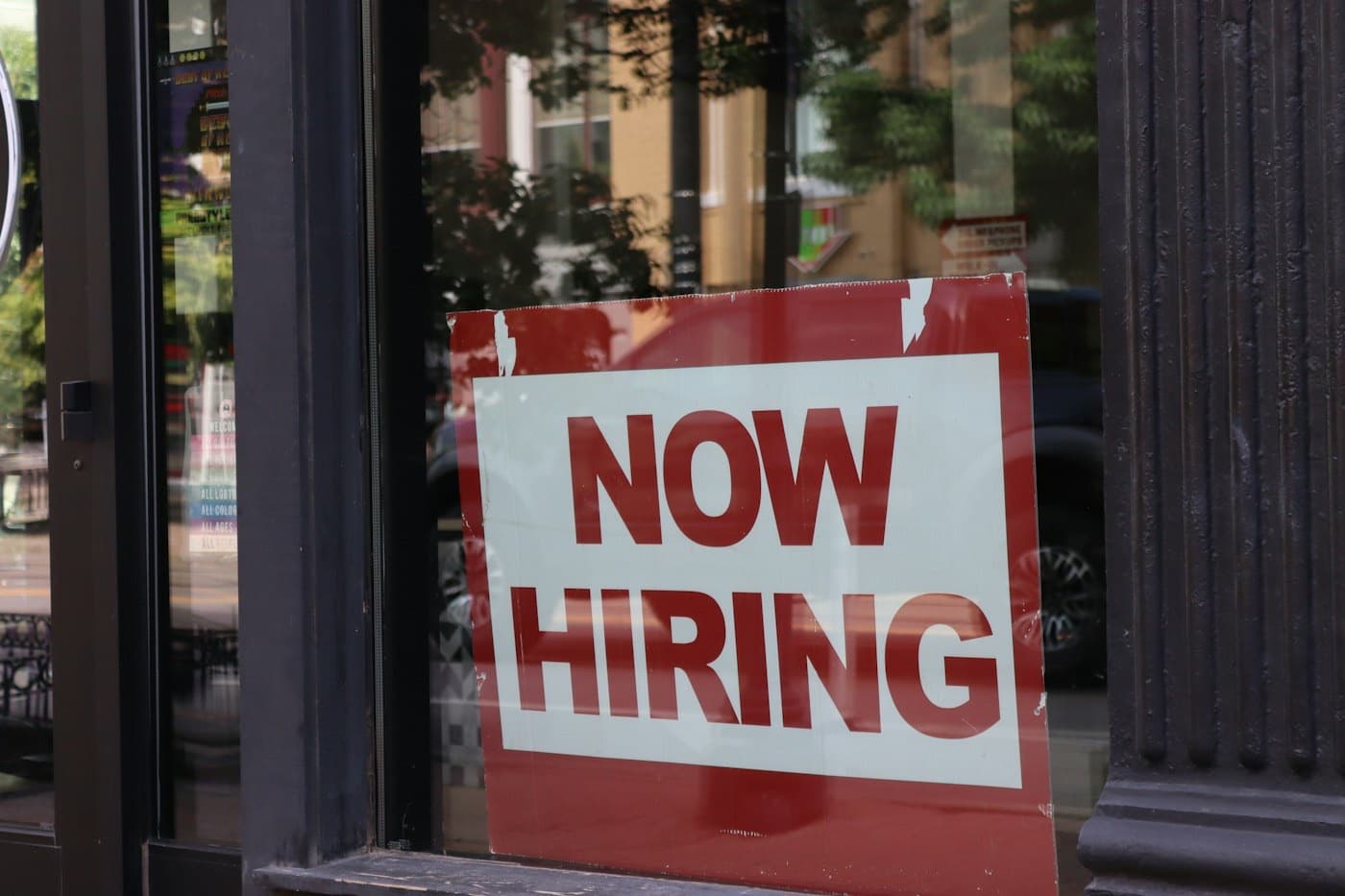
Houston employers added 39,700 jobs in the twelve months ending June 2026 — third-most of any US metro — while metro unemployment climbed to 5.2% as more people entered the labor force. More openings and more applicants at the same time, landing on a resume stack that AI has made almost impossible to read. That combination changes what recruiting video is for in Houston this year: the job is no longer attracting more applicants. It is filtering the ones you already have.
Here is the data behind that, and what a filtering video actually looks like when you shoot it.
Houston Is Hiring Hard, and the Applicant Pool Got Deeper
The Greater Houston Partnership's midyear economic update, reported August 6, 2026, put Houston third in the country for job growth over the prior twelve months:
- Houston: 39,700 jobs added (June 2025 to June 2026)
- New York led with 69,100, Dallas 54,600, Los Angeles 37,400, Phoenix 33,200
- Houston accounted for roughly 8% of all US job growth — about four times the national pace against a US total of 531,000
- Gains led by construction (15,000), administrative support (10,000), health care (6,800), restaurants and bars (4,500), professional/scientific/technical (3,100), and retail (2,200)
- Losses in arts and recreation, real estate and equipment rental, oil and gas extraction, and finance and insurance
(Source: Community Impact on the GHP midyear update)
At the same time, metro Houston unemployment rose to 5.2% in June from 4.6% in May. The Partnership attributes part of that increase to more people entering the labor force, noting it came alongside healthy payroll growth and fewer initial unemployment claims. (Source: Houston.org)
Read that as a hiring manager instead of an economist and the picture is specific: openings are up, applicants are up more, and people are moving out of sectors that shed jobs into sectors that added them. The person laid off in oil and gas extraction is applying to your admin support opening. Whether that is a great hire or a six-month hire is exactly the question your process now has to answer — at volume.
The Resume Stopped Working as a Filter
Robert Half surveyed more than 2,000 US hiring managers in November 2025 and published the results in March 2026:
- 67% say reviewing AI-generated applications has slowed their hiring process
- 84% report heavier workloads because of AI-generated and AI-optimized applications
- 65% say the surge in applications has made candidate skills harder to verify
- Roughly 20% report hiring delays of two weeks or more
- Respondents reported AI being used to embellish or fabricate work history and skills
(Source: Robert Half)
Every resume now reads like a strong writer wrote it, because one did. The document that used to sort people has stopped sorting people. What is left is a filtering problem, and most employers are trying to solve it *after* the application arrives — screening calls, extra interview rounds, skills tests, take-homes. That is the most expensive place in the funnel to solve anything.
Move the Filter Upstream, Onto the Screen
The cheapest filter runs before anyone applies. That is what recruiting video does when it is built for accuracy instead of appeal.
A recruiting video designed to sell gets everyone to apply. A recruiting video designed to be accurate gets the wrong people to close the tab and the right people to apply on purpose. In a market where you cannot screen everyone who reaches you, the second one is worth more per dollar — and it is the one almost nobody in Houston is making.
Accuracy on camera looks like this:
- Show the actual shift. A 5:45 a.m. call time on a job site off the Grand Parkway, not a sunrise drone shot of the skyline.
- Say the pay range out loud. A number on screen filters harder in nine seconds than a screening call does in twenty minutes.
- Name the hard part. Ten hours on your feet. Rotating weekends. Two hundred inbound calls a day. The people who stay are the ones who heard it first.
- Put current employees on camera answering one question: what surprised you in your first 90 days. Real answers, not endorsements.
- Show the room, the truck, the tools, the commute. Physical detail is the thing AI-written job posts cannot fake and candidates cannot un-see.
- Be specific about the ladder. Where this role goes in two years, and who currently holds that seat.
None of that requires a big shoot. It requires being willing to put the unglamorous parts on screen, which is a decision, not a budget.
Why This Is Worth More in Houston Than Almost Anywhere
Construction added 15,000 jobs here in twelve months — the largest gain in the region and a category where turnover is expensive and safety-critical. Administrative support added 10,000, a category now absorbing career changers from finance, insurance, and energy. Health care added 6,800 and competes against every other employer in the Texas Medical Center for the same technicians. These are exactly the roles where a mis-hire costs weeks and where a 90-second video that tells the truth pays for itself on the first cycle.
There is a second return most employers miss. The same footage does double duty:
- The full 2 to 3 minute version lives on your careers page and gets linked in every job post
- 30-second cutdowns run as geo-targeted paid social around the zip codes you actually hire from
- Vertical cuts go on LinkedIn and Indeed, where video job posts stand out against a wall of identical text
- A link sent before the interview means candidates arrive already knowing the job — so your interview time gets spent on fit instead of explanation
- The same interviews produce culture and client-facing content for the rest of the year
One production day. A library that works on recruiting and reputation at the same time.
The Practical Read
Houston is going to keep adding jobs faster than the country does. Applications are going to keep arriving faster than teams can read them, and the writing on those applications is going to keep getting better without the candidates getting better. The employers who win the next twelve months are not the ones with the widest funnel. They are the ones whose funnel is honest early enough that the wrong people never enter it.
If you want a recruiting video built to filter — accurate, watchable, and made for the screen your candidates are actually on — start a project, or see how Always-On Content keeps that library working all year.